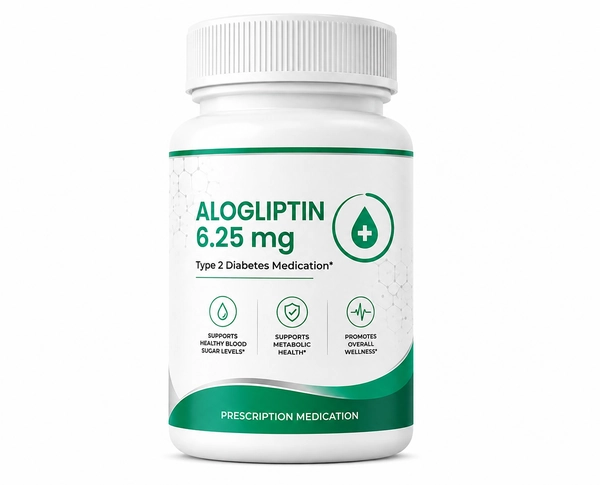
Alogliptin 6.25 mg is an oral prescription medication for adults with type 2 diabetes that belongs to the DPP-4 inhibitor class. Used alongside diet and exercise, it helps regulate blood glucose levels by supporting the body’s natural response to glucose, particularly after meals.
The 6.25mg strength is specifically used for adults with severe kidney impairment or end-stage kidney disease, as the appropriate dose depends on kidney function and other individual factors. Always use this medicine strictly under the supervision of a healthcare professional, who may monitor your kidney function throughout treatment.
Uses
This medicine may be prescribed as part of a treatment plan to:
- Help lower elevated blood sugar levels
- Improve overall blood glucose control
- Support diabetes management alongside diet and exercise
- Be used with other diabetes medicines when additional control is needed
- Provide a reduced dose for adults with severe kidney impairment or end-stage kidney disease
It is used to treat type 1 diabetes or diabetic ketoacidosis.
How Does Alogliptin 6.25 mg Work?
Alogliptin belongs to the DPP-4 inhibitor class of medicines. DPP-4 inhibitors help increase the activity of certain hormones involved in blood sugar regulation.
After you eat, these hormones help the pancreas release insulin when blood glucose levels are elevated. The medicine also reduces the release of glucagon, a hormone that signals the liver to produce glucose.
Together, these effects can help lower blood sugar and improve glucose control. The treatment works as part of an overall diabetes management plan rather than replacing a healthy diet or physical activity.
Dosage and How to Use
Take Alogliptin 6.25 mg exactly as prescribed by your healthcare professional. The appropriate strength depends on your blood sugar control, kidney function, other medicines, and overall health.
The 6.25mg dose is specifically used for adults with severe renal impairment or end-stage renal disease under U.S. prescribing information. It should not be assumed to be the appropriate dose for everyone.
- Take the tablet once daily as directed.
- It can be taken with or without food.
- Swallow the tablet whole with water.
- Do not take more than the prescribed amount.
- If you miss a dose, take it when you remember unless it is almost time for your next dose. Do not take two doses together.
- Do not change your dose without speaking with your healthcare professional.
- Continue following your recommended diet, exercise, and blood sugar monitoring plan.
Your healthcare professional may monitor kidney function during treatment and adjust the dose when necessary.
Possible Side Effects
Like any prescription medicine, this may cause side effects. Some people may experience:
- Headache
- Cold-like symptoms
- Sore throat
- Joint or muscle pain
- Stomach discomfort
More serious reactions are possible. Contact a healthcare professional promptly if you develop severe or persistent stomach pain, especially if the pain spreads to the back, as this may be a sign of pancreatitis.
Serious allergic reactions can also occur. Seek immediate medical attention if you experience swelling of the face, lips, tongue, or throat, difficulty breathing, hives, or a severe skin reaction.
Warnings and Precautions
Before starting treatment, tell your healthcare professional about your medical history and any medicines or supplements you take.
This medicine may require additional monitoring if you:
- Have kidney problems
- Have previously experienced pancreatitis
- Have liver problems
- Have a history of heart failure
- Have had an allergic reaction to alogliptin or another DPP-4 inhibitor
- Take insulin or medicines that increase insulin release
- Are pregnant, planning to become pregnant, or breastfeeding
People taking this medicine with insulin or certain diabetes medicines may have a higher risk of low blood sugar. Your healthcare professional may adjust other medicines when necessary.
Drug Interactions
Alogliptin can be used with some other diabetes medicines, but combining treatments may affect blood sugar levels or increase the risk of side effects.
Tell your doctor or pharmacist about all medicines you use, including:
- Insulin
- Sulfonylureas and other diabetes medicines
- Prescription medicines
- Over-the-counter medicines
- Vitamins and supplements
- Herbal products
Do not start, stop, or change another diabetes medicine without professional advice.
Storage
- Store the tablets in their original packaging.
- Keep them at room temperature.
- Protect the medicine from excessive heat, moisture, and direct light.
- Do not freeze the tablets.
- Keep the medicine out of the reach of children.
- Do not use tablets after their expiration date.
- Ask a pharmacist about the appropriate disposal of unused or expired medicine.
FAQs
What is Alogliptin 6.25 mg used for?
It is used with diet and exercise to help control blood sugar in adults with type 2 diabetes. The 6.25mg strength is a reduced dose used for certain patients with significant kidney impairment.
Is Alogliptin 6.25 mg used for type 1 diabetes?
No. Alogliptin is not indicated for the treatment of type 1 diabetes or diabetic ketoacidosis.
Why is the 6.25mg strength prescribed?
This reduced strength is used when kidney function is significantly reduced. A healthcare professional should determine the appropriate strength based on kidney function and other individual factors.
Can Alogliptin be taken with food?
Yes. It can generally be taken with or without food. Follow the directions provided by your healthcare professional.
Can it cause low blood sugar?
Alogliptin alone has a relatively low risk of causing low blood sugar. However, the risk can increase when it is used together with insulin or certain medicines that stimulate insulin release.
Does Alogliptin cure diabetes?
No. It helps control blood sugar but does not cure type 2 diabetes. Continue following your prescribed diabetes treatment plan, including diet, physical activity, and regular monitoring.
References
The following trusted medical and patient-information resources were referenced while preparing this content. Readers are encouraged to consult these sources for additional information about alogliptin, its uses, dosage, precautions, side effects, interactions, and storage.
- MedlinePlus – National Library of Medicine – Alogliptin Drug Information
- U.S. National Library of Medicine – DailyMed – Alogliptin Tablets: Prescribing Information
- Mayo Clinic – Alogliptin (Oral Route): Uses, Dosage, Side Effects & Precautions
- Australian Commission on Safety and Quality in Health Care – Nesina (Alogliptin): Consumer Medicine Information
Medical Disclaimer
The information on this page is intended for general informational purposes only and should not be considered medical advice, diagnosis, or treatment. Alogliptin is a prescription medication and should only be used under the supervision of a qualified healthcare professional. Always consult your doctor or pharmacist before starting, stopping, or changing any medication.