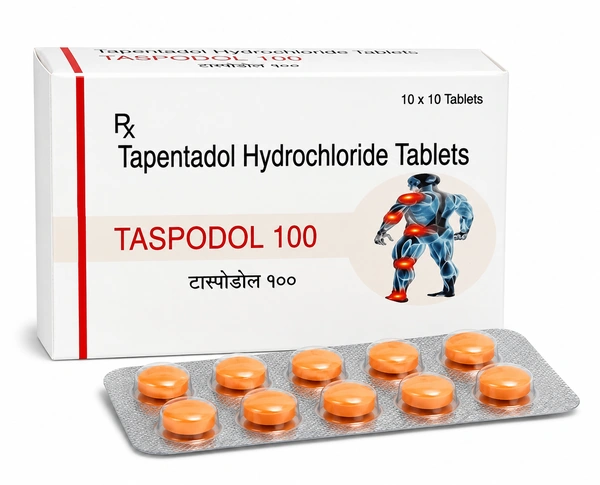
What is Taspodol 100 mg?
Taspodol 100 mg is a prescribed pain medication which also contains tapentadol, an opioid analgesic, that is used for reducing severe pain once other treatment options have been ineffective or not suitable.
By affecting a person’s central nervous system, this drug prevents the normal signal of pain from reaching the brain, and that, in turn, can give pain relief but the side effects of drowsiness, dizziness, respiratory difficulties, and addiction might happen too. Because of these adverse effects, the use of the drug ought to be under strict supervision by medical practitioners only.
Uses of Taspodol 100 mg
This medicine may be prescribed when severe pain needs stronger relief and other options have not worked well enough.
It may be considered when:
- Other pain medicines have not provided sufficient relief
- Non-opioid options are not suitable
- Previous treatments caused unwanted effects
- An opioid medicine is considered appropriate by the treating doctor
The goal is to find an amount that provides adequate pain control without unnecessary exposure to the medicine.
How Does Taspodol 100 mg Work?
At the level of the nervous system, two actions of Tapentadol dominate. Its binding to the mu-opioid receptor not only alters the manner in which pain information is conveyed and interpreted (perception) but also changes its transmission.
On the other hand, noradrenaline reuptake inhibition by Tapentadol is also responsible for analgesia. Since pain signals are partially dependent on noradrenaline activity, blocking its reuptake is believed to be another way by which Tapentadol acts as a painkiller.
The two effects, therefore, together provide pain relief. However, the same mechanisms that are responsible for relief can also impact the brain and nervous system. Hence, some people may experience fatigue and lack of alertness after taking it because of the side effects.
Dosage and How to Use
Take Taspodol 100 mg exactly as prescribed by your doctor. Australian prescribing information recommends individualising the dose according to the severity of pain, previous treatment and the person’s response.
For immediate-release tapentadol, the usual dosing interval is every 4 to 6 hours, although your doctor may choose a different dose or schedule when needed.
A few simple points are important:
- Swallow the tablet whole with water.
- It may be taken before, with or after food.
- Follow the schedule given by your doctor.
- Do not take more than prescribed.
- Do not take an additional tablet because the pain feels stronger.
- Never give your medicine to another person.
- Do not stop regular treatment suddenly without medical advice.
If you forget a dose, follow your doctor’s instructions. Do not take two doses together to make up for the missed tablet.
Possible Side Effects
Some people may experience side effects which are:
- Nausea
- Constipation
- Dizziness
- Drowsiness
- Headache
- Dry mouth
- Tiredness
These effects may be reduced as the body becomes used to tapentadol.
Warnings and Precautions
Before starting treatment, tell your doctor about your health history and any medicines you currently use.
Extra care may be needed if you:
- Have asthma or another breathing condition
- Have liver or kidney problems
- Have sleep-related breathing difficulties
- Have previously had problems with opioid medicines
- Have a history of alcohol or substance dependence
- Have suffered a head injury
- Take medicines that make you sleepy
- Are pregnant or planning to become pregnant
- Are breastfeeding
Australian product information states that this medicine should not be used in certain situations involving dangerously slow breathing, paralysis of the gut or acute poisoning with alcohol, sleeping medicines or other medicines that affect the central nervous system.
Alcohol, Driving and Other Precautions
Avoid alcohol while taking this medicine.
Sleepiness, a condition in which breathing slows or even stops, and loss of awareness have all been reported as a result of combining sedatives and alcohol.
In addition, it can influence your focus and the time it takes you to react to stimuli. Do not drive a car or operate other kinds of machinery until you are aware of the effects of the medicine on you.
Drug Interactions
Some medicines may enhance the effects of tapentadol. Especially when you are using other medicines that have the effect of slowing down your central nervous system.
Let your doctor or pharmacist know if you use one or more of the following medicines:
- Past sleeping tablets and sedatives
- Benzo’s
- Other types of opioid drugs
- Medicines which are for neuropathic pains such as gabapentin or pregabalin
- Antidepressants
- Antipsychotics
- Antihistamines that cause drowsiness
- Cannabis
- Alcohol
- Medicines whether you prescribe or buy them yourself
Combining opioids and sedatives can lead to serious drowsiness, difficulties breathing, coma or even a fatal scenario. Your doctor might either reduce the amount of drug you receive or may simply keep a closer eye on you.
Storage
- Keep the tablets in their original blister pack.
- Store below 30°C.
- Keep them in a cool, dry place.
- Protect them from moisture, heat and direct sunlight.
- Do not store them near a sink or in the bathroom.
- Keep the medicine out of reach of children.
- Do not use tablets after the expiry date.
- Return unused or expired tablets to a pharmacy for safe disposal.
FAQs
Why is Taspodol 100 mg classified as a controlled medicine?
Tapentadol is an opioid with risks of misuse, addiction, overdose and dependence. In Australia, immediate-release tapentadol is classified as Schedule 8, so its use is subject to tighter controls than ordinary pain medicines.
Can the same dose be used for everyone?
No. The appropriate amount depends on factors such as the severity of pain, previous opioid exposure, other medicines and how the person responds. Your doctor may adjust the treatment accordingly.
Does Taspodol 100 mg affect bowel movements?
It can. Constipation is a common opioid-related side effect. Drinking enough fluid, staying physically active when possible and following your healthcare professional’s advice can help manage it.
What should I tell my dentist?
Tell your dentist that you are taking an opioid medicine before having dental treatment. This information can be important when they are planning medicines, sedation or pain relief.
Can I give an unused tablet to a family member with severe pain?
No. Prescription opioid medicines should never be shared, even if another person has similar symptoms. The medicine may be unsafe for them or interact with another treatment they are taking.
Why does my doctor need to know about previous opioid use?
Previous opioid treatment can affect how your body responds to a new opioid. It helps your doctor choose a safer starting dose and reduce the risk of excessive sedation or other complications.
References
The following Australian medical and regulatory resources were referenced while preparing this content. They provide detailed information about tapentadol, including its uses, dosage, precautions, side effects, interactions, storage and disposal.
- Australian Commission on Safety and Quality in Health Care – PALEXIA IR Consumer Medicine Information
PALEXIA IR – Australian Medicine Information - Healthdirect Australia – Tapentadol
Tapentadol – Healthdirect Australia
Medical Disclaimer
The information on this page is intended for general informational purposes and should not be considered medical advice, diagnosis, or treatment. Taspodol 100 mg is presented as a tapentadol product, and tapentadol is a prescription opioid medicine. It should only be used under the supervision of a qualified healthcare professional. Always consult your doctor or pharmacist before starting, stopping, or changing any medication.